Skip to content

Older and Younger – reports on Internet usage and usability

Two reports published recently address on the issued of usage and usability for children and seniors.

One Rates of Computer and Internet Use by Children in Nursery School and Students in Kindergarten Through Twelfth Grade: 2003 describes the levels of computer and Internet usage by children. “This Issue Brief describes the percentage of students in grades 12 or below who used computers or the Internet in 2003. The Brief highlights the fact that computer and Internet use is commonplace and begins early. Even before kindergarten, a majority of children in nursery school use computers and, and 23 percent use the Internet.”

The other, Older Wiser Wired, published by AARP documents some usability studies. “More and more U.S. adults over 50 have computer access (approximately 36 million), with most of those using their computers to go online. They bank, they buy, they search, they read, they contribute. But how hard is it for them to find what they need? AARP is convening a community of those who use the web to provide information and services to older adults, those who write about this subject, or those who develop web content for clients with older adult audiences.”
Oracle Night

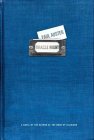
Oracle Night : A Novel (Auster, Paul)
Paul Auster has the talent to wed ordinary, fantastic, impossible, and tragic events into the fabric of a story. He demonstrates this to varying degrees in a number of his books, some more fantastic and impossible than others. Oracle Night has fantastic elements but also contains, for me, a good measure of ordinary and believable events and scenarios. As you become more involved with the protagonist and are hoping for his success and triumph, Auster adds tragic and disturbing events. Another example of his mastery of story telling and writing.

Maybe We Should Let That Kudzu (that’s theatening to overtake the house) Grow

In this week’s issue of the Scout Report:

The Scout Report — Volume 11, Number 20, In The News: Kudzu May Help Curb Excessive Drinking

Study: Herb Helps Curb Binge Drinking
http://www.newsday.com/news/health/wire/sns-ap-binge-drinking-chinese-herb,0,179837.story?coll=sns-ap-health-headlines …..
For more than 100 years, kudzu has been seen by many as a curse on the landscape of the American South, growing up to a foot in a single day, and extending over thousands of acres of land. This pervasive plant may be getting a better name soon, as recent research has indicated that the plant may be able to help curb binge-drinking. In a recent study conducted by researcher Scott Lukas at the Harvard-affiliated McLean Hospital indicates that those participants who took kudzu pills drank an average of 1.8 beers per session, compared with the 3.5 beers consumed by those who took a placebo. This research draws on many hundreds of years of anecdotal evidence from China, where various parts of the kudzu plant have been used in a variety of treatments. The initial reports seem to suggest that while kudzu won’t in fact turn heavy drinkers into complete teetotalers, it will in fact help them cut back.”

The MapMaker’s Wife


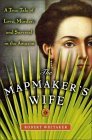
I’m not sure why I picked up the The Mapmaker’s Wife, by Robert Whitaker, at our local library (The Central Rappahannock Regional Library), but I’m glad I did. He spins a tale of adventure, scientific exploration, bad decisions, bad luck, atrocious conditions, and perseverance. The book is set in 17th Century Peru (what is now Ecuador) and South America in the mid 17th Century. The continent had not been fully explored at that point. The story concerns first a scientific expedition to measure a degree of latitude at the equator, with the hope of deciding whether Newton’s or Descartes’ predictions of the Earth’s shape was correct. Whitaker does a good job helping us to imagine the difficulties theses scientists form England and France had to endure. Still it’s difficult for me to imagine that these people would embark on a mission that they new would take several years and from which they may never return. That’s part of the story and explains how the mapmaker got to Peru and married the daughter of a well-to-do land owner. The remaining story of her perseverance and good and bad fortune as she and her brothers travel from Peru tot he other side of the continent on the Amazon, is as fantastic and believable. Thoroughly worth a read, and thanks to Whitaker for writing it. You’ll also want to see the accompanying Web site.


Comment from Kathryn Birch
I enjoyed the book because I have always loved science. I only wish historians would realize that this is a great way for people who hate reading non-fictional history to have more of an interest in the past.
I also wish the book had an addendum of the actual letter that Jean Godin sent to La Condamine regarding his wife’s travail in the Amazon. I will see if I can access this on the web!

Wild Braid press


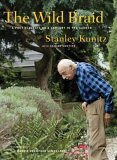
A few stories are starting to appear about the new book “The Wild Braid: A Poet Reflects on a Century in the Garden” by Stanley Kunitz and, our friend Genine Lentine.

In the NY Times: A Poet in Winter Relishes Spring in His Garden – New York Times

Stanley Kunitz, Pulitzer Prize winner, poet laureate of the United
States – twice, the first time from 1974 to 1976, when the title was
“consultant in poetry,” the second in 2000 at the age of 95 – will turn
100 this summer. And he is still hard at work, he says, in his office
and his garden.

In The Boston Globe: Boston.com / News / Boston Globe / Magazine / Earth Angel

Although Stanley Kunitz began spending summers in Provincetown in 1957,
he didn’t buy a house there until 1962. It was on Commercial Street in
the West End, with about 2,000 square feet of front yard. Or, rather,
sandbank: It lacked even a single blade of grass.

An AP story on Yahoo! News: Kunitz Works on Poetry Ahead of Tribute – Yahoo! News

“It’s harder as the years go by,” Kunitz says. “One is always looking
for something to say that hasn’t been said before, that doesn’t seem to
be an imitation of the old work. It is always a search for something
… that is representative of the best you can do. And if it isn’t
that, it isn’t worth publishing.”

first human-poultry interaction system

Wired Campus Blog: Reach Out and Touch Someone, Literally

“Researchers at the National University of Singapore have built a tool that lets users touch animals in real time over the Internet. … “This is the first human-poultry interaction system ever developed,” says the professor in charge of the project.”

UMW Faculty Academy (1)

The UMW Faculty Academy starts today. It’s the 10th annual edition of this event started by David Ayersman when he was director of instruction technology at Mary Washington College. I guess we’ve come a long way from the first one where Dave & I gave the keynote addresses.

The program looks pretty good and I’m looking forward to attending when I can. I’ll be in two panel sessions. Here are the titles marked as links to the materials I’ve put together for myself.

Tuesday May 10, 2:30-3:45, panel discussion II Combs 237 – “Grading and evaluating non-print materials and projects

Wednesday, May 11, 11:30-12:30 panel discussion III Combs 139 “Blogging In Teaching and learning

UMW Faculty Academy (2)

Attended the first session of the UMW Faculty Academy today. I really liked the presentations by Brian Lamb, Project Discoordinator, Office of Learning Technology, The University of British Columbia

Been digital so long it feels like print to me…

Adventures In Wikiland, a workshop about Wikis.

I was part of a panel Grading and evaluating non-print materials and projects

Wiki Software Lists

I did a little bit of research about selecting Wiki software:

Online Citation Tools

I came across two online tools you can use to construct citations. The first is Online Citation Maker – Interaction-Design.org: A site about HCI, Usability, UI Design, User Experience, Information Architecture and more... It seems to work well, gives you a choice of MLA or APA style, and provides several tips for using citations. The second is Citation Machine by David Warlick. it seems to work as well, but it’s not as nice looking as the first.

Updated URL for Citation Machine on 09/09/2005