A Place to Bury Strangers links for 2009-07-03

-
From what I hear, the new APTBS record is amazing. Aside from that, you really can’t touch that Fever Ray record.
The first two links deal with open access to information. The first is a presented as a parable that tells of an inventor who has a great idea and develops it into a product. However, the truckers, the ones who control the distribution lines will not agree to distribute it unless the inventor signs over all the intellectual property rights to the invention. it is the situation many researchers face when they wish to publish their findings in an academic journal. The second is a link to the Creative Commons site that deals specifically with education, ccLearn.
The last link is to Keven Kelley’s book about the network economy. I’ve read parts of it, and referred to it while developing some ideas about using non-text resources from the Web.
 Here are a couple of sites that seem useful when searching for images.
 Two articles from Infoworld. One about the benefits of PGP and the other on password strength. The second includes a spreadsheet for calculating how long it might take to determine a password.
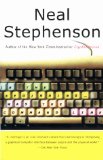
In the Beginning…was the Command Line
A short, interesting book that is a related series of essays about the relationship between Unix or Linux with a way to understand a computer. This is overlayed with a discussion of the superiority of Unix/Linux to the major windowed operating systems, OsX and Windows.
A particularly interesting and thought provoking essay is titled “Metaphor Shear.” It takes into the realm of philosophy in terms of dealing with the metaphor a windows system presents to us, and how we have learned to live with it, even to depend on it.
The book finishes with a parable of an operating system that would allow us to create a universe and thus make all the choices in our lives. What if the interface were developed so that all our choices were represented by radio buttons or check boxes? Suppose a problem develops and you call customer support?
Tagged book review, stephenson“If you get a flack on the line, he or she would tell you that your life was actually fine, that there was not a thing wrong with it, and in any event it would be a lot better after the next upgrade rolled out. But if you persisted, and identified yourself as advanced, you might get through to an actual engineer.”
“What would the engineer say, after you had explained your problem and enumerated all the dissatisfactions in your life? He would probably tell you that life is a very hard and complicated thing; that no interface can change that; that anyone who believes otherwise is a sucker; and that if you don’t like having choices made for you, you should start making your own.”
 You can’t avoid it. The hardware and software technology that supports the Web makes it relatively easy and quite natural to make information in all sorts of formats – text, images, audio, video – available. With a high speed connection to the Internet you can experience all these formats quite easily. Virtually all the news and broadcast sites on the Web make their content available in a variety of ways including text, audio, images, and video. Individuals have the option to offer these formats in their blogs.
In addition to sites that present information in a variety of formats, some sites offer collections based on a specific type of media. Among these, some include popular culture items such as episodes from TV shows or popular music. Others make it possible for anyone with an Internet connection to add their content in digital format. Here are some examples:
Some questions to consider:
Some search tools specialize in dealing with media other than text. Here are a few:


No tuition money? No problem! There are many top universities that offer free courses online. This list ranks several of the best free university courses available for people who want to enhance their personal knowledge or advance in their current field.
 If something can be digitized, put into some digital format, then it is likely to be available on the Web. So it is reasonable to expect be able to access photos, still images, audio recordings, and video. Almost all of the music we listen to, and almost all of the pictures and videos we take are in a digital format. We are familiar with working with media in digital formats. The tools (mostly software) to copy from one format to another or one device to another relatively common and not too hard to use. Combine all this media in digital format with the fact that any one may put anything they’d like on the Web (technically speaking all parts of the Internet have equal access) and its no surprise that we can find all sorts of information in a variety of media formats.
Being available and accessible on the Web doesn’t guarantee that the information is reliable, worth spending our time with it, or that it is legal to use. Still, there is a good deal of very useful and significant information on the Web as images, audio, or video. The media is on a digital network so we can access it, save it, and distribute an exact copy of it to others. This makes some people nervous, and raises some important questions for all of us to consider regarding the nature of copyright and its effects on our culture and society. Sticking with the theme we’ve established, we will look at ways to find information that can be useful to us, and consider the implications of the ways we use it.
As we’ve seen before the information we seek is in a variety organizational formats: as individual items, a specialized collection or database, or part of a store. Sometimes you will come across it in these formats through the usual search methods and sites that you normally use. There isn’t too much new we can add about finding what you need except to say that most search tools allow you to specify the format of the information you are seeking, if the format is an issue. There are sites that specialize in keeping data in a specific format and we will take a look at them. Let’s go to it!
Tagged multimedia, searchign and researching, web

Copyright and multimedia on the Web
All the media is on one platform – the Web. That has implications for how the media is distributed, how it is used, and how it is valued. Copies have little value because they can be easily made. Consider last.fm – we can legally listen to music anywhere on the Web. Another example is lala.com. There we can upload our music and listen to it through any Web connection. Because the media is available through one platform it is essentially in one format – digital as we stated earlier, and so it can be easily modified and different items can be combined.
The way the law in the U.S. is written, much of what we’re likely to find on the Web is copyrighted material. Copyright does not have ot be claimed or asserted on a Web site. Whenever a work such as text, audio, images, or video is given a form such as being put on the Web, The person or entity that created it automatically holds the copyright on that item. To be sure, there are a few exceptions such as items that have been put into the public domain or items produced by employees of the U.S. Government. The holder of the copyright on an item has the exclusive right to:
These right are arguably meant to provide some protection for the person who creates an item so that it is not misused or that any profits derived from the use, sale, or distribution go to the creator. These rights continue for many decades after the death of the original copyright holder, so that some say that copyright laws that give exclusive rights for a long period of time is too restrictive and limits ways we share our culture.
In any case, you need to determine what the copyright restrictions are on an item before you make a copy or modify any media that you’ve found on the Web. This is true regardless of whether the site where you found the material contains any statements claiming copyright or how the material can be used. If guidelines for using the material are present then follow them.
Some people use Creative Commons to set permissions for the ways their works may be used. This has advantages for both the producer and consumer. A producer can set permissions, either very strict, very lax, or somewhere in between, for reuse of her items. This can be done online, once, and fairly easily. A consumer can easily find the permissions associated with an item. For example, all of Wikipedia is now licensed under a Creative Commons license that allows for use provided that the use provides proper attribution and any item derived form the Wikipedia source is likewise sharable by others. This is an example of using copyright to put information into the hands of others so it can be shared, remixed, and reused.
The site “Copyright and Fair Use in the Classroom, on the Internet, and the World Wide Web“Â explains copyright issues and helps students and faculty determine if they can use information from the Internet is
Tagged copyright, multimediaCommentary Comments (0) Permalink